What Should I Do After Storm Damage to My Trees? Insights from a Tree Care Company in Highland Park, Illinois
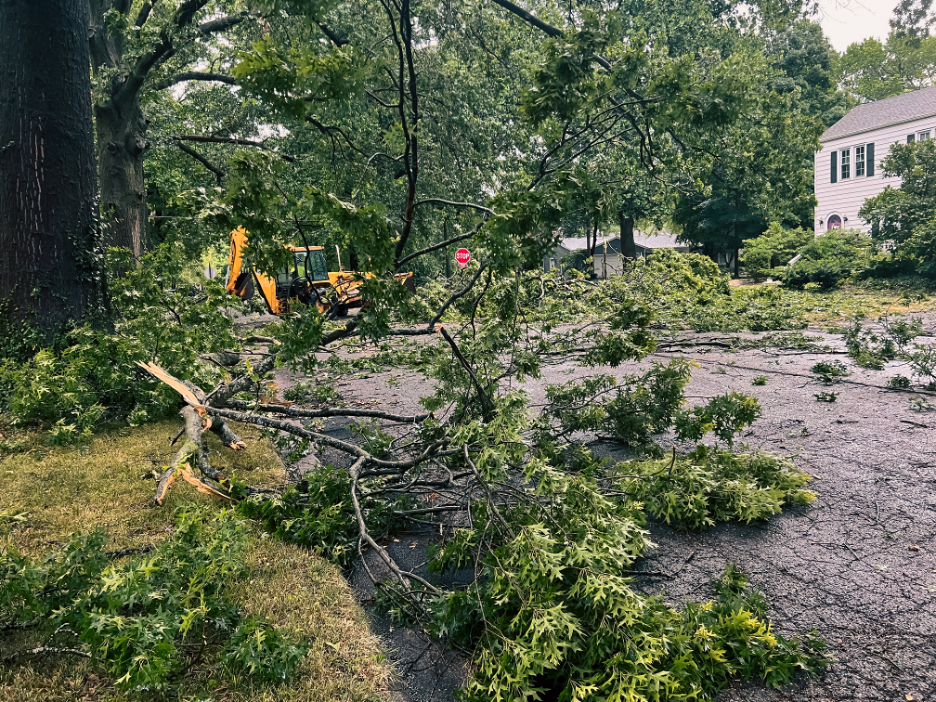
Storm damage can leave trees cracked, leaning, split, or tangled in broken limbs. After heavy wind, rain, or falling branches, it can be difficult to know whether a tree is still stable, whether it can recover, or whether it has become a safety concern.
The first step is to keep people and property away from damaged trees until the situation can be evaluated. Below, this tree care company in Highland Park, Illinois is going to explain what to do after storm damage to your trees.
What Should I Do First After a Tree Is Damaged in a Storm?
After storm damage, the top priority is safety. Stay away from broken limbs, hanging branches, split trunks, leaning trees, and any tree or branch near power lines. Even if the damage does not look severe from the ground, weakened limbs can shift or fall without much warning.
You should also avoid trying to pull branches down, climb the tree, or cut large limbs yourself. Storm-damaged trees can be unpredictable because pressure, weight, and hidden cracking may not be obvious.
A professional tree care company in Highland Park, Illinois can inspect the damage and determine the safest way to handle cleanup, pruning, or removal.
Can a Storm-Damaged Tree Be Saved?
Some storm-damaged trees can be saved, but it depends on the type and severity of the damage. A tree with a few broken limbs may recover with proper pruning. A tree with a split trunk, exposed roots, severe lean, or major structural damage may be more difficult to preserve.
The location of the damage also matters. A broken branch on the outer canopy may be less serious than a crack through the main trunk or a large limb failure near the center of the tree.
At Brown Tree Service Inc, our certified arborists can evaluate the tree’s condition and help determine whether preservation, corrective pruning, cabling, or removal should be considered.
Why Should Hanging or Broken Limbs Be Removed Carefully?
Hanging limbs can be one of the most dangerous forms of storm damage. These branches may still be attached to the tree, caught in nearby limbs, or resting under pressure. They can fall suddenly, especially if the tree moves in the wind or if someone tries to remove them without the right equipment.
Broken limbs should be removed in a way that protects the tree and reduces the chance of further damage. Improper cuts can leave wounds that make recovery harder or create future weak points.
For homeowners in the Highland Park area, professional storm damage cleanup can help address immediate hazards while also protecting the long-term health of trees that can be saved.
When Does a Storm-Damaged Tree Need to Be Removed?
A tree may need to be removed if it is leaning heavily, has major trunk splitting, shows root plate movement, has large sections of canopy loss, or is positioned where failure could damage a home, garage, fence, driveway, sidewalk, or neighboring property.
Removal may also be recommended when the remaining structure is too weak to support healthy growth. A tree can look partly intact but still be unstable if the main stem, roots, or major limbs have been compromised.
A qualified tree care company in Highland Park, Illinois can review the whole tree, not just the most obvious broken limb, before recommending the next step.
Should I Prune a Tree After Storm Damage?
Pruning may be appropriate when the tree is structurally sound enough to recover. Proper pruning can remove broken, dead, cracked, or unstable branches while preserving as much healthy growth as possible.
The goal is not to strip the tree back aggressively. Over-pruning can stress the tree and make recovery more difficult. A careful pruning plan should remove damaged material while maintaining the tree’s natural structure and balance.
If the storm damage is minor, pruning may be all that is needed. If the damage is more serious, pruning may be part of a larger tree care plan.
What Should I Look for After the Obvious Debris Is Gone?
Once fallen branches are removed, it is still important to look for less obvious damage. Cracks in large limbs, bark separation, lifted soil around the roots, new leaning, split branch unions, and hanging limbs higher in the canopy can all signal a problem.
Some damage may not be easy to see from the ground. Mature trees, large shade trees, and trees close to structures should be evaluated carefully after a major storm.
At Brown Tree Service Inc, we look beyond the debris on the lawn. Our team can assess the condition of the tree, the surrounding property, and the level of risk before recommending cleanup, pruning, support, or removal.
How Can I Reduce Future Storm Damage?
Not all storm damage can be prevented, but regular tree care can reduce certain risks. Removing deadwood, pruning weak or crowded branches, addressing structural issues, and monitoring tree health can help trees respond better during severe weather.
Trees that are diseased, decayed, poorly structured, or already stressed may be more vulnerable during storms. Routine inspections can identify problems before a storm turns them into a larger issue.
Professional tree care is especially important for mature trees, trees near buildings, and trees in high-traffic areas where limb failure could create a safety concern.
Looking for a Tree Care Company in Highland Park, Illinois?
After storm damage, it is important to know whether your tree needs cleanup, pruning, support, or removal. A certified tree care company in Highland Park, Illinois can evaluate the damage, identify safety concerns, and help you decide whether the tree can be preserved.
At Brown Tree Service Inc, our arborists and tree care professionals help homeowners address storm-damaged trees with safety, tree health, and property protection in mind. Contact us to schedule an assessment and get the right plan for your damaged trees.